Warming seas appear to be squeezing the nutrient supply that fuels much of the ocean’s microscopic life, according to a new analysis that marries two decades of NASA…
Warming seas appear to be squeezing the nutrient supply that fuels much of the ocean’s microscopic life, according to a new analysis that marries two decades of NASA satellite measurements with shipboard sampling and genetic evidence from marine microbes. The study, published June 5 in Science Advances, concludes that nutrient stress is widespread across the global ocean and could, over time, ripple through marine ecosystems that depend on phytoplankton—the tiny, photosynthetic organisms that underpin ocean food webs.
Instead of directly measuring concentrations of key nutrients such as nitrogen, iron, and phosphorus everywhere in the sea—a practical impossibility at global scale—the researchers used a space-based indicator of plankton health. They focused on subtle changes in the balance between carbon and chlorophyll in phytoplankton detected from orbit. When chlorophyll levels drop relative to carbon, the signal suggests that plankton are struggling to maintain the machinery of photosynthesis, consistent with nutrient limitation.
“As our ocean continues to change, the ability to observe and track ocean conditions through sustained, high quality remote sensing observations has never been more important,” said Laura Lorenzoni, program scientist for NASA’s Ocean Biology and Biogeochemistry Program at the agency’s headquarters in Washington. She emphasized that plankton form the foundation of the marine food web that supports economically important activities.
To build their global picture, the team drew on roughly 20 years of observations from the Moderate Resolution Imaging Spectroradiometer (MODIS) aboard NASA’s Aqua satellite. They paired those satellite records with phytoplankton samples gathered during research cruises in multiple ocean basins. A key bridge between the two datasets came from genetics: the scientists examined DNA markers in Prochlorococcus, an extremely small yet abundant photosynthetic microbe, to identify molecular signs of nutrient stress. Linking genetic signals with satellite trends allowed the researchers to map where phytoplankton communities appear to be flourishing and where they are under strain.
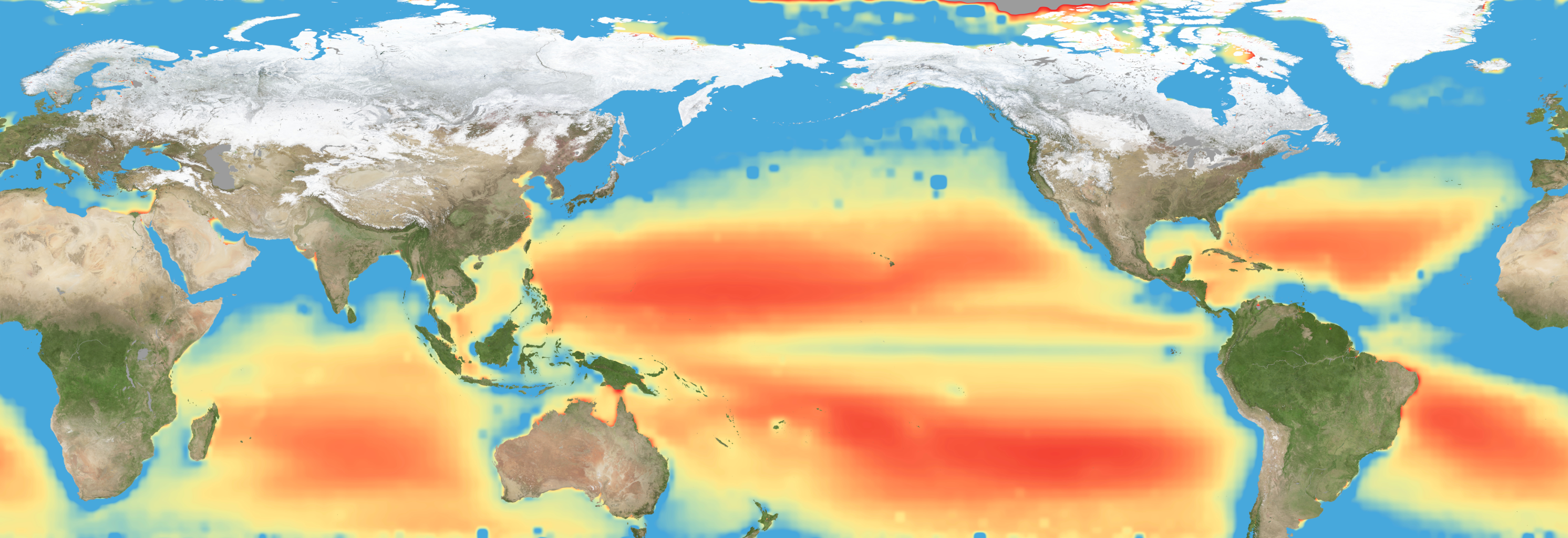
The strongest stress signals emerged in the subtropical gyres—vast, generally calm regions spanning the Atlantic, Pacific, and Indian oceans. These areas are prone to strong layering of the water column, with warm, low-density surface water sitting atop colder, denser water below. That stratification acts like a barrier, suppressing the upward mixing of deeper, nutrient-rich waters that would otherwise replenish the sunlit surface where phytoplankton grow.
“When the surface of the ocean warms, it generates this very stable situation where a layer of low-density water sits on top of higher-density cold water,” said coauthor Adam Martiny, an oceanographer at the University of California, Irvine, comparing the effect to summertime conditions in a lake where warm water floats above a colder layer.
In the South Pacific—already among the most nutrient-depleted stretches of the world ocean—the analysis pointed to particularly intense stress tied to shortages of nitrogen and iron, making it the most severely affected region the team identified.
The North Atlantic, however, produced an unexpected result: some areas showed less overall stress than anticipated. While the data indicated phosphorus scarcity, the biological impact on microorganisms appeared relatively modest. The researchers suggest plankton may be able to blunt phosphorus limitation by more efficiently recycling the element or swapping out phosphorus-rich compounds inside their cells. Nitrogen limitation is tougher to sidestep, they note, because nitrogen is essential for proteins and cellular components needed for photosynthesis and nutrient acquisition.
The study also found that nutrient stress rises and falls with seasons and with large-scale climate patterns that alter ocean temperatures, including El Niño and the Pacific Decadal Oscillation. In contrast, La Niña conditions—typically associated with cooler waters over much of the Pacific—were linked to stronger upwelling that delivers nutrients to the surface, easing stress in some regions. Overlaying these swings, the researchers report, is a longer-term pattern consistent with warming-driven stratification increasingly constraining the ocean’s nutrient supply.