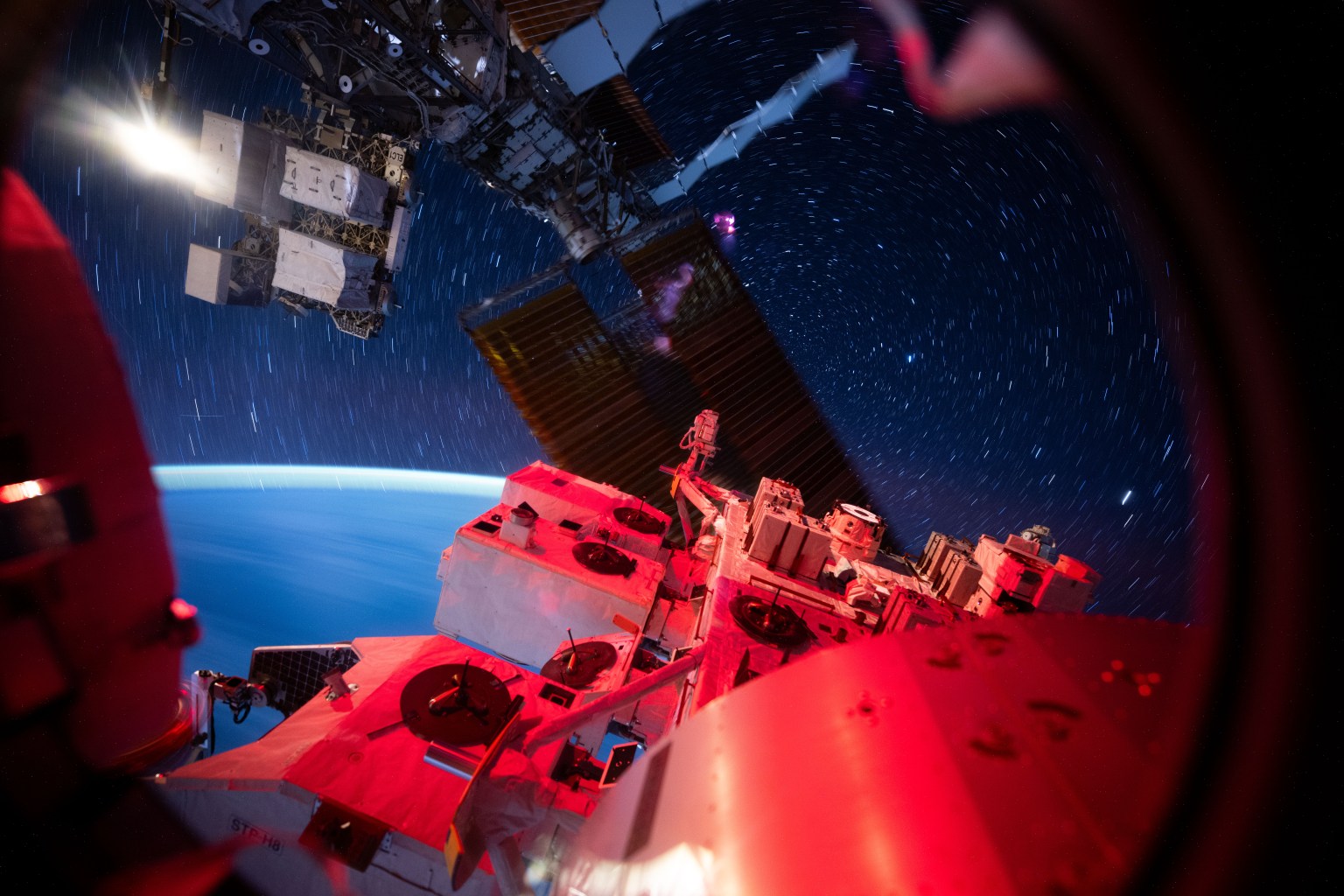
NASA has released its 2025 Annual Highlights of Results, offering a detailed look at the science carried out aboard the International Space Station over the past year.
NASA has released its 2025 Annual Highlights of Results, offering a detailed look at the science carried out aboard the International Space Station over the past year. Published in May 2026, the report captures the scale of the station’s research output in 2025, when teams used the orbiting laboratory to run more than 750 investigations. Collectively, the work expanded understanding of how living systems respond to spaceflight, tested technologies needed for future exploration, and generated insights with potential benefits on Earth.
Among the studies NASA spotlighted is an effort aimed at preserving astronaut performance during the long missions envisioned for the Moon and Mars. At the same time, ISS research continued to push into biomedical frontiers, including biomaterials experiments designed to support tissue engineering and regenerative medicine.
One NASA project probed a particularly practical challenge: whether surgery could be performed remotely in microgravity using compact robotic tools. To simulate medical procedures in space, astronauts used rubber bands as task stand-ins while operators on Earth controlled a miniature robotic system. The setup allowed researchers to examine how communication lag affects performance and to evaluate whether the robot could execute precise movements under spaceflight conditions. The findings indicated that while time delays extended how long procedures took, they had little effect on accuracy. The result suggests that high-precision surgical interventions might eventually be feasible beyond Earth—potentially at a future lunar outpost or even on Mars. The same approach could also translate to remote regions on Earth where access to specialized surgical care is limited and robust, portable systems are needed.
In another highlight, Roscosmos’ Magnetic 3D Bioprinter experiment took advantage of microgravity to build complex structures using magnetic levitation. Researchers used the method to arrange calcium crystals into forms that could function as synthetic bone grafts, intended to spur new bone growth. Samples produced in orbit showed stronger structural organization and a high potential to support bone tissue regeneration. That matters for spaceflight: astronauts lose bone mass in microgravity, raising the risk of fractures during extended missions. The long-term vision is equally ambitious—fabricating treatments on demand in space, enabling crews to address skeletal injuries far from terrestrial hospitals.
Materials science also featured prominently. NASA examined how the harsh space environment—particularly prolonged exposure to vacuum—changes the performance and longevity of hardware relevant to exploration. Over six months, the agency exposed a suite of materials, including polymers, thermal protection systems, spacesuit components, and radiation-shielding candidates. The investigation also evaluated biomaterials infused with various forms of melanin, the pigment known for its protective role against ultraviolet radiation. Materials incorporating fungal melanin performed best, showing the strongest resistance to radiation-related damage. Such biologically derived shielding could offer a lighter, more sustainable option for future deep-space travel, while also pointing to potential Earth applications ranging from medical protection to UV defense and more radiation-tolerant construction materials.
Japan’s space agency, JAXA, reported results from a long-duration test of all solid-state lithium-ion batteries, a technology viewed as potentially safer and more resilient than conventional lithium-ion systems. A battery pack assembled from multiple solid-state cells was exposed to space for 434 days, including vacuum and extreme temperature swings, while researchers tracked electrical behavior, degradation, and response to radiation. The pack remained stable, showed no signs of degradation, and lost only 2% of its capacity—evidence that the technology could help power safer, more reliable systems for missions to the Moon and Mars, as well as demanding environments on Earth.