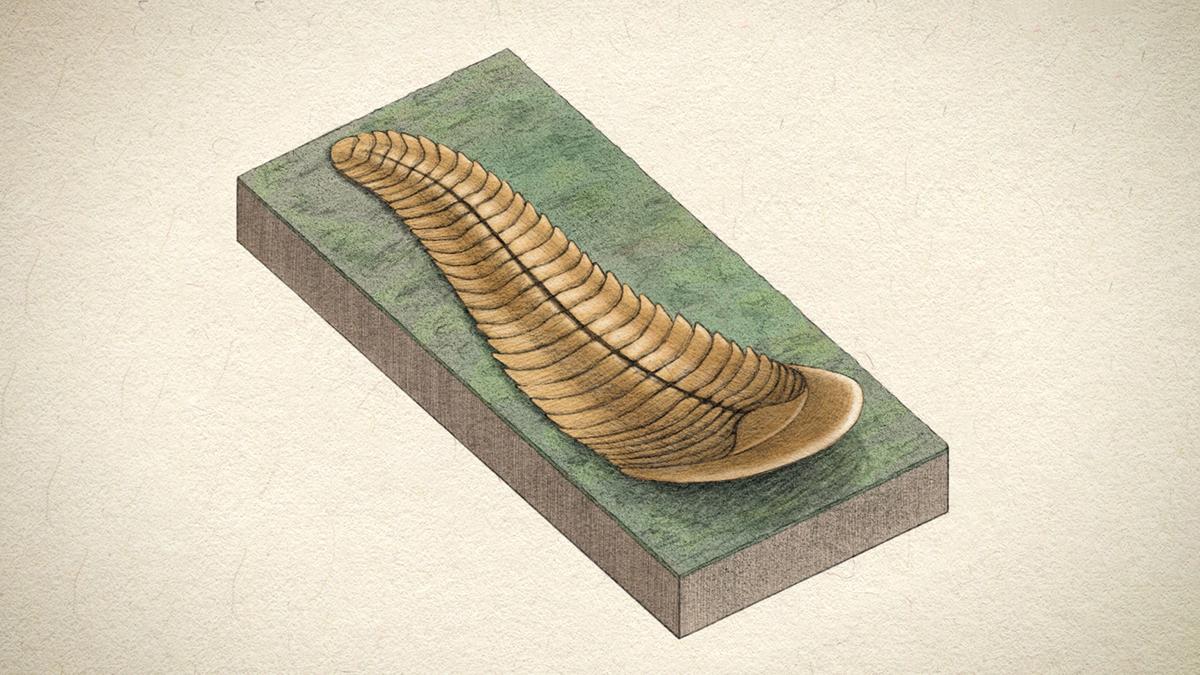
How does an expert read an ancient fossil, and what stories can a specimen tell?
How does an expert read an ancient fossil, and what stories can a specimen tell? In this video, Scott Evans, a palaeontologist and curator at the American Museum of Natural History in New York City, offers some answers by walking viewers through the careful observation, data-gathering and interpretation that turn fossils into insight. Evans specialises in invertebrate palaeontology, and in particular the Ediacaran, a period more than500 millionyears ago when the earliest complex life emerged on the seafloor. Drawing on his fieldwork at Nilpena Ediacara National Park in Australia, he details how we know these early animals began to move, and how at least one species even favoured turning to one side over the other – the earliest known example of ‘handedness’. With 3D animation illustrating his findings, the video reveals how this ancient marine life connects to animals today, and how this knowledge might help shape our search for life on other planets.