This is part of my surfacing the calling-out-of-idiocy, by crossposting whenever smart people do so.
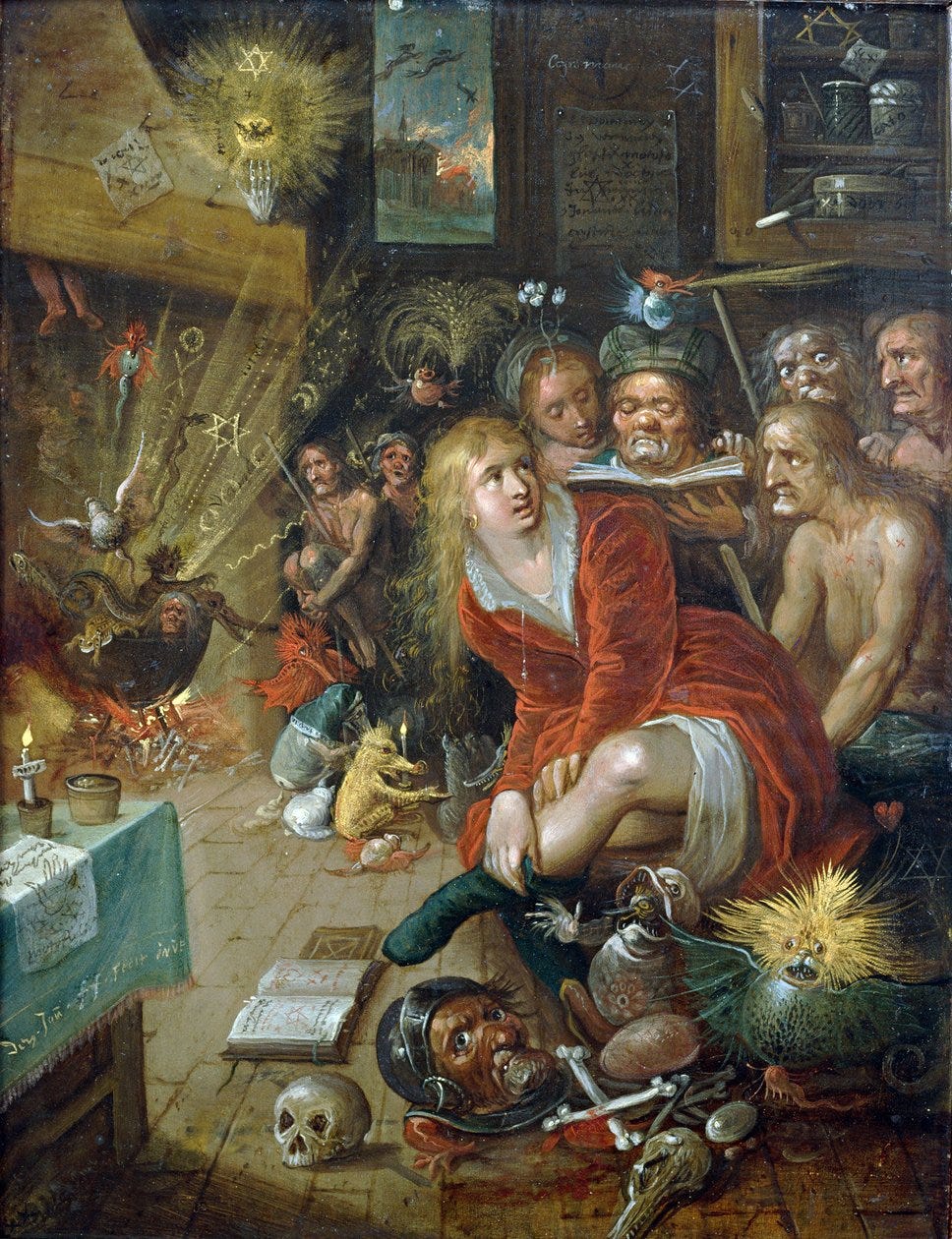
This is part of my surfacing the calling-out-of-idiocy, by crossposting whenever smart people do so. So here, in this post and its predecessor, we have a diptych made up of this crosspost of: Evans, Alice. 2026. “Stop Pink-Washing Patriarchy!”The Great Gender Divergence. October 18. https://www.ggd.world/p/stop-pink-washing-patriarchy. Drezner, Dan. 2026. “The Op-Eds About Higher Education Need to Stop Until We Figure Out What the Hell Is Going On With the Op-Ed Contributors”.Drezner’s World. October 19. https://braddelong.substack.com/p/crosspost-dan-drezner-the-op-eds. Dan called out theright. Alice now calls out the “left”. Although the people she critiques are not people of theleftin any sense that I recognize as valid: reinforcing and justifying patriarchal institutions by pinkwashing them just because they have roots other than in the Dover-Circle cultures is not established-hierarchy scrutinization and breaking, and I see only intellectual currents that focus on scrutinizing and breaking established hierarchies as having any valid rights to aleftcard. Alice speedruns through 1970s–80s feminist history, postcolonial studies, with a sidelook at the plough hypothesis of the rise of patriarchy (Alesina, Giuliano & Nunn). She argues that we now have more than a generation of feminist and postcolonial scholarship, and now the chatbots trained on it, systematically understated patriarchy by: hiding how far some regions have moved toward gender equality in the 20th century Spotlighting queens, litigants, market women and witches-as-rebels treats the exception as if it were the rule, and so mismeasures the degree of patriarchy. How did we get her? In her telling, 1980s feminists wanted to show that “another world is possible,” so they searched the record for egalitarian societies, matriarchies and female agency. Meanwhile, moral-prestige incentives pushed Western scholars to “punch up” at home and avoid judging other cultures, for fear of being called neocolonial. And so we had the development of standard metrics (female labor participation, property, ritual roles) that often count drudgery rather than power, and that work very hard to avert their eyes form violence, coercion, forced marriage, and the destruction of women’s spaces where they could coalesce and form coalitions. https://www.ggd.world/p/stop-pink-washing-patriarchy https://www.ggd.world Why do so many academic histories, popular books and museum exhibits celebrate exceptional ‘kick ass’ women, while minimizing patriarchy? It may feel empowering, exciting and rebellious, but such narratives are often grossly misleading. They blind us to colossal progress towards gender equality in some world regions, alongside persistent patriarchy elsewhere. Today, let’s examine why gender studies went so wrong, and how we might study patriarchy with open-minded empiricism. Feminist scholars of the 1970s and ‘80s often wanted to show that patriarchy was not inevitable, but rather another world was possible. They scoured the ethnographic records for small-scale egalitarian societies, celebrated ancient ‘matriarchies’, and pointed to ancient goddess-worship.Looking back at the European past, gender historians sought to highlight women’s historic agency, importance, wealth, and labour. This scholarship was often motivated by a feminist desire to counter past erasure and show that women mattered. But as Judith Bennett (2006) brilliantly argued, while it may feelempoweringto document female agency and rebellion, this minimizes historic patriarchy. Thankfully, patriarchy has largely been emasculated in most advanced countries. Challenges persist (such as women predominating in firms with greater flexibility and lower productivity), but pale in comparison to the moral gravity of femicides and arranged marriages. Yet the same violence, abuse and male-dominance that would provoke virulent critique in the West are sometimes ignored, or even defended elsewhere. Captured concubines in Persia are celebrated asstrategic, modern Cairene women who embraceobedienceand seclusion are heralded as‘agentic’, while laws banning female genital mutilation are condemned as ‘stigmatizing’. What on earth went wrong? Western feminists gain moral prestige by ‘punching up’ and criticising male hierarchies at home, but are often reluctant to scrutinize gender norms in other societies for fear of being branded neocolonial or racist. Elites in the Global South may downplay patriarchal oppression in their own countries, wary of being cast as ‘backward’. Globally-comparative analysis of gender is thus taboo. Yet if we actually want to advance gender equality, we need to get real. We need to stop pink-washing patriarchy, and embrace an open, empirical enquiry. TheBritish Library’s exhibition on Medieval Women showcased a tremendous collection of manuscripts and artefacts, demonstrating women’s prominence, but almost to the point of sugarcoating 15th century misogyny. Yes,Christine de Pizanwrotethe Book of the City of Ladies, asserting women’s equal competence. But she faced an uphill struggle. Before mass printing, each manuscript had to be transcribed by hand, and every major institution was dominated by men. Head into any Western bookshop and you’ll find celebrations of “bad ass” women from the past, but these are slim pickings. In a database of almost 59,000 European university teachers and academy members active before 1800, there were just108 women. Misogyny was rife. As Protestant and Catholic churches sparred for souls in 16th century West-Central Europe, they aggressively demonstrated their power tovanquish the devil(Leeson and Russ 2018). Thousands of ‘witches’ (mostly women) were accused, tried and murdered. Paintings cast women as potentially deceitful and dangerous, circulating via printing.Frans Francken the Younger’s paintings show women in ordinary, respectable clothing undressing to join demonic rituals - hinting that satan’s agents live amongst us. Analyses of small-scale societies must also be viewed with caution. The Standard Cross Cultural Sample (SCCS) gives the Ashanti its highest possible score for ‘female power’, recognising Queen Mothers, but this same society was rife with pawning - as girls were given off as collateral. Moreover, focusing on a single, royal actor like the Queen Mother ignores whether women could organize powerful coalitions to defend their collective interests. Violence is another major omission. Accounts centred on female prominence, labor, property ownership, matrilocality, and permissive sexual norms are misleading if they do not also recognise violence and coercion. That includes risks of rape, capture, enslavement and head-hunting. If men can get what they want through brute force, or arranged marriage, they need not demonstrate care, companionship or devotion. In my analysis of the SCCS, wife-beating was reported as common in 80% of coded societies. The Siraya of Taiwan were matrilocal and women did the lion’s share of agriculture. But men still engaged inout-bounding raidingand exclusively dominated governing councils. Analyses that focus on gender divisions of labour may well be tabulating drudgery, while omitting child marriage, impoverishment and routine coercion. If you attend any Economics course on gender, you’ll probably learnploughsfavoured male brawn and naturalised men’s participation in the public sphere, whereas hoes maintained women’s centrality. This is possibly one of the most misleading ideas in economics (save all the other ones). Women’s participation in agriculture doesn’t tell us whether women controlled any of the surplus, let alone whether they could build powerful coalitions. Hoe agriculture produces larger surpluses compared with slash and burn, and anything which generated a storable surplus made a village more vulnerable to external predation. This generated stronger incentives for raiding, defence and warfare. Male military coalitions grabbed power and en