Historians have no shortage of candidates for why the world’s economic center of gravity eventually shifted toward northwestern Europe rather than remaining in East Asia. Explanations for the “Great Divergence” often highlight slow-moving social and institutional patterns—kinship structures, marriage practices, or agricultural systems such as labor-intensive wet-rice cultivation. Yet a very different kind of story keeps resurfacing in recent debates: the possibility that one cataclysmic civil war in the eighth century left a political trauma so deep that it shaped Chinese statecraft for centuries, with downstream consequences for long-run economic dynamism.
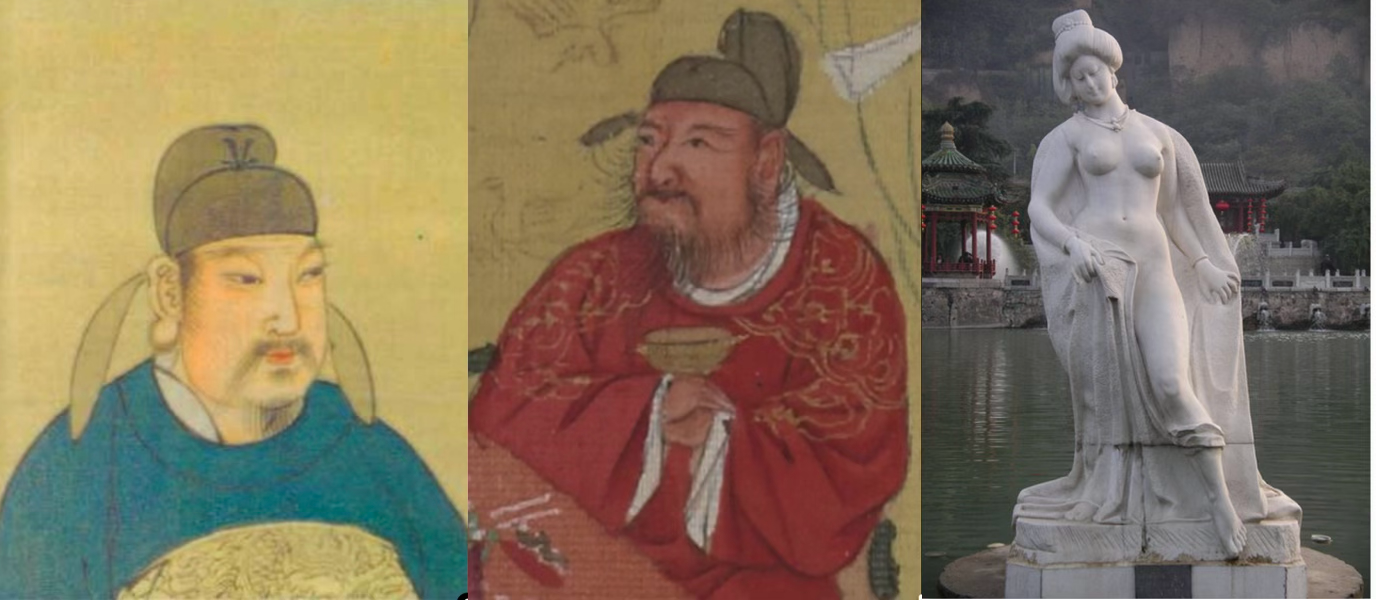
That conflict was the An–Shi Rebellion (756–763), an uprising launched not by a foreign invader but by the Tang dynasty’s own frontier leadership. The revolt began under the command of An Lushan, a powerful border general. It did not remain a single man’s rebellion for long: An Lushan was killed by his son, An Qingxu, and the movement then passed to An Lushan’s lieutenant, Shi Siming. Shi, too, was murdered by his own son, Shi Chaoyi, before the insurrection was finally crushed and Tang authority reasserted.
The human wreckage left behind appears vividly in the era’s poetry. One frequently cited example is a poem by Sikong Shu, written in the rebellion’s aftermath—likely around 763—about seeing a friend off as he returns north once “the raiders are pacified.” The poem juxtaposes the formal restoration of order with a landscape that remains shattered. The speaker recalls fleeing south together during the chaos; now, even as “the times are cleansed,” his companion must go back alone. The lines dwell on distance and disorientation: hair turned white in exile, the old homeland reduced to the familiar outline of “blue hills,” and the journey marked by broken walls, ruined forts, and a bleak mountain pass under moon and stars.
Commentary on the poem underscores how much of its force comes from what is left unsaid. The imagery—stars over a pass, dawn light on remnants of fortifications—signals a deeper absence: the missing towns, the vanished waystations, the emptied infrastructure that once made travel and commerce routine. Where readers might expect a springtime of renewal after victory, the prevailing mood is closer to permanent autumn.
This is why some scholars and commentators treat the An–Shi Rebellion as more than a bloody episode. They see it as a turning point for a state that, at the time, represented one of the most powerful, populous, and technologically advanced polities on Earth. The Tang court came close to collapse at the hands of a commander it had empowered. Surviving that near-disintegration may have rewritten the regime’s sense of risk: the gravest threat was no longer at the frontier but within the imperial military itself.
In this telling, the political lesson learned in the eighth century echoed long after the battlefield dust settled. The governing elite and the state apparatus spent the next millennium designing institutions to ensure that no imperial general could ever again mount such a challenge. Those arrangements likely did what they were intended to do—protect emperors and courts from another An Lushan. But the lingering question is whether the same safeguards also constrained other forms of change, shaping China’s trajectory long after the rebellion’s immediate scars had faded.