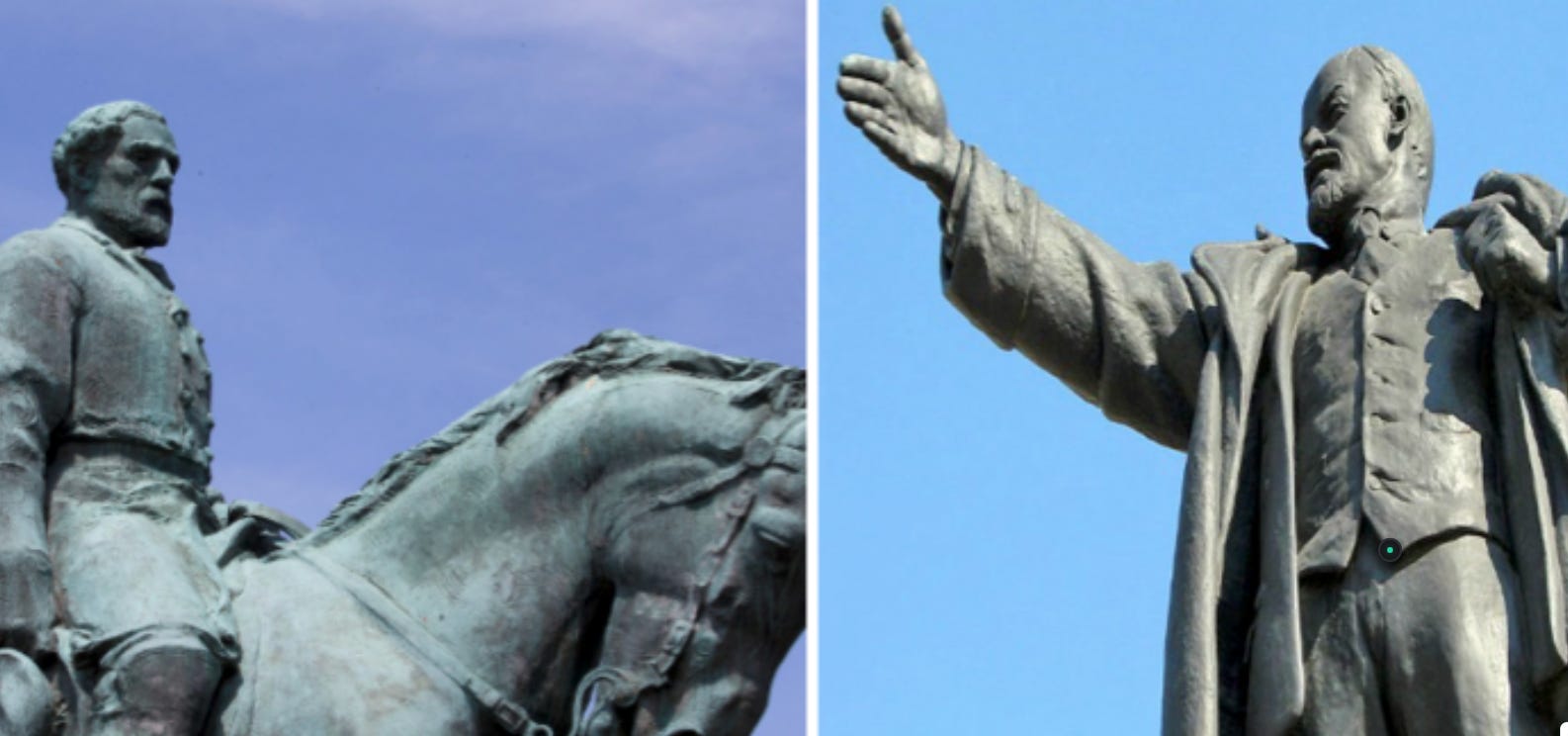
Adam Tooze, in a recent link roundup, resurfaced a familiar portrait of Vladimir Lenin: the revolutionary as cultivated intellectual. The source is a 2017 Tariq Ali essay that casts Lenin as a man shaped by literature and classical learning—an image meant to complicate the standard focus on dissolved parliaments, the early Soviet secret police, and political violence.
Ali’s account emphasizes the cultural world Lenin (born Vladimir Ulyanov, later adopting a pseudonym to evade tsarist police) grew up in. Lenin’s father, a conservative and respected school inspector, is described as a figure who brought “high culture” into the household. Ali writes that Sunday afternoons featured readings from major European and Russian authors, including Shakespeare, Goethe, and Pushkin. In school, Lenin developed an intense attachment to Latin; according to Ali, a headteacher even imagined a future for him as a philologist. That career never materialized, but Ali argues the habit of classical reading endured: Virgil, Ovid, Horace, Juvenal, and Roman political speeches in their original language.
From there, the essay links Lenin’s reading life to politics. During roughly two decades in exile, Ali says, Lenin repeatedly returned to Goethe, rereading Faust many times. And when Lenin shocked fellow Russian social democrats in April 1917 by calling for a socialist revolution—breaking with prevailing orthodoxies—Ali highlights a literary riposte. Facing criticism from comrades, Lenin reached into Goethe’s text, quoting Mephistopheles: “Theory, my friend, is grey, but green is the eternal tree of life.” The point, in this telling, is that Lenin’s literary fluency was not ornamental; it was deployed in argument at decisive moments.
But there is another quotation—older, darker, and arguably more revealing—that critics say better captures the collision between Lenin’s appreciation of art and the logic of revolutionary coercion. In Edmund Wilson’s 1940 book To the Finland Station, Wilson recounts an episode in which Lenin and the writer Maksim Gorky listen to Beethoven’s Appassionata. Lenin praises the music as unmatched and “superhuman,” expressing pride in what people can create. Then, according to Wilson, Lenin abruptly turns: he cannot listen too often, he says, because it softens him—makes him want to say “stupid nice things” and stroke people’s heads. In the world he believes he inhabits, that tenderness is dangerous. You must not stroke anyone’s head, Lenin warns; you might get your hand bitten off. Instead, you must “hit them on the head, without any mercy,” even if the stated ideal is a society without force. The work, he concludes, is “infernally hard.”
The dispute is not really about whether Lenin knew Latin or quoted Goethe. It is about what such details are used to imply. Presenting Lenin as a tragic, cultured figure overtaken by circumstances can function—critics argue—as a kind of reputational laundering: a way to look past the coercive machinery that consolidated after the October 1917 coup.
In that critique, the gulf between Marx’s imagined pathway and what followed looms large. Marx expected revolution in a wealthy, technologically advanced industrial society, where a temporary “dictatorship of the proletariat” would lead toward a free association of producers. Detractors note that Rosa Luxemburg and others warned early on about the dangers of Lenin’s project; and with a century of hindsight, they argue those warnings underestimated, rather than exaggerated, the scale of catastrophe that revolutionary dictatorship could unleash.
Why it matters
How Lenin is framed—humanist intellectual or architect of repression—shapes public memory of the twentieth century’s most consequential political experiment. These narratives influence how modern movements borrow symbols, tactics, and justifications from 1917. As debates over authoritarianism and political violence resurface globally, the stakes lie in whether culture is treated as exculpatory, or as compatible with—and sometimes enlisted in—the exercise of power.