In summary
For Robert K. Merton, scientific discoveries do not spring from the isolated genius: they mature when accumulated knowledge, shared problems, and common tools set multiple scholars on the same path—and then they arrive in several independent copies. The unique discovery is the exception that needs explaining; the “multiple” is the rule.
Economics is one of the fields where the thesis is confirmed most clearly. In February 1815, four authors published the same theory of rent within three weeks. In 1930, three economists from three countries formalized the cobweb theorem. The same happened with general equilibrium (1954), growth (1956), and the CAPM (1961–66).
- Merton’s numbers. Of 264 multiples studied with Elinor Barber, 179 have two discoverers and 11 have between six and nine; 20% are “consumed” within a year.
- Timing. When communication works, the gap between discoverers is 0–3 years. With a barrier of language, mathematics, or non-publication, it stretches to decades: 95 years between Cournot and Chamberlin–Robinson.
- Credit. The name does not account for all discoverers: “Solow model,” “Arrow–Debreu,” “Black–Scholes.” Where it has been measured—in structural biology—those who arrive second lose about one fifth of the citations, not all of them.
- Limits. Multiples are frequent for discoveries known to be important and rare for others. Some ideas, from Cantillon to von Neumann to Muth, have never been duplicated.
Who Robert K. Merton was

Robert King Merton (Philadelphia, 4 July 1910 – New York, 23 February 2003) was the sociologist who founded the sociology of science. Born Meyer Robert Schkolnick to Eastern European Jewish immigrant parents, he taught at Columbia University from 1941. In 1994 he became the first sociologist to receive the National Medal of Science.
We owe to him expressions that have entered common usage: self-fulfilling prophecy, unintended consequences, the Matthew effect, role model. The theory of multiple discoveries occupies three essays: Priorities in Scientific Discovery (1957), Singletons and Multiples in Scientific Discovery (1961), and Resistance to the Systematic Study of Multiple Discoveries in Science (1973).
He should not be confused with his son Robert C. Merton (1944), a financial economist and Nobel laureate for the method of valuing derivatives. The son nonetheless enters this story as a case study: the 1973 options formula is itself a discovery made by more than one hand.
The theory: multiple discovery is the rule
Merton’s thesis is that every scientific discovery is, in principle, a multiple: more than one scholar reaches it independently, either together or years apart. Discoveries made only once—the “singletons”—are the residual cases that call for a special explanation.
Merton presented the hypothesis on 23 January 1961, at the conference marking 400 years since the birth of Francis Bacon. To Bacon he attributed the four ingredients of a social theory of discovery:
- Cumulative knowledge. Every discovery rests on what is already known. When the prerequisites are in place, the next step is within reach of many.
- Collective work. Scientists refine ideas through interaction, work on the same problems, and read the same authors.
- Method. Shared investigative procedures reduce the weight of individual ingenuity.
- Time. Discoveries are “births of time”; they arrive when antecedent conditions are satisfied, not by chance.
In the 1963 essay the conditions become two. The stock of knowledge and tools required must by then be available, and a sufficient number of researchers must be looking at the same problem. What directs attention can be social needs, developments within the discipline, or both. When the two conditions hold, the discovery is virtually inevitable.
The three conditions at the top are Merton’s; the three outcomes depend on how information circulates. Recognition closes the cycle: the credited discovery becomes knowledge on which others will build.
Singles are missed multiples
Many singles, Merton argues, are interrupted multiples: someone published first and the others stopped. The evidence he lists is ten, which can be traced back to three families:
- Work left in the drawer. Results not published (Cavendish, Gauss) or published and ignored (Mendel, Gibbs), which others later rediscovered on their own.
- Abandoned research. Investigations dropped after someone else’s announcement, footnotes admitting they were anticipated, colleagues pointing out a prior instance. In a survey cited by Merton, 31% of productive mathematicians reported pointless duplications.
- Scientists’ behavior. Priority races, exhortations to publish quickly, sealed packets deposited with academies, anagrams. Researchers behave as if they knew others were about to get there.
Genius redefined
The theory does not erase genius; it redefines it. The scientist of genius is the one whose discoveries would have been found anyway, but by an entire phalanx of colleagues: the functional equivalent of many lesser talents. Out of about 400 of Lord Kelvin’s 661 communications, Merton and Barber found at least 32 multiples, shared with some thirty other scientists, including Stokes, Helmholtz, Clausius, Poincaré, and Rayleigh. Freud, in roughly a hundred publications, notes more than thirty.
Merton also distances himself from Bacon, who believed method could level out differences in intellect: talent speeds up discovery; it is not its only source.
An idea rediscovered twenty times, born with an economic example
The multiples hypothesis is itself a multiple. Merton counts some twenty formulations between 1828 and 1922: Comte, De Morgan, Galton, Engels, Duhem, Kroeber, Einstein, up to Ogburn and Thomas’s list of about 150 cases. The first is by Thomas Macaulay, in 1828, and uses an economic example: the doctrine of rent, proposed almost at the same time by two authors with no connection to each other.
Merton’s vocabulary
| Term | Meaning | Example in economics |
|---|---|---|
| Multiple | The same discovery made independently by several scholars | Theory of rent, 1815: Malthus, West, Torrens, Ricardo |
| Single (singleton) | A discovery made only once | von Neumann’s game theory, 1928 |
| Missed multiple | A single only because the first announcement stopped the others | Balanced-budget result: Salant and Samuelson do not publish their own findings |
| Maturity of the times | Prerequisites have accumulated and many researchers are working on the same problem | Golden rule of accumulation, 1961–62: six authors |
| Premature discovery | A correct result that the discipline is not ready to use | Cournot 1838, Gossen 1854, de Finetti 1940 |
| Priority | Recognition goes to whoever publishes first | Dispute between Torrens and Ricardo over comparative advantage |
| Eponymy | Naming the discovery after one discoverer | “Solow model,” “Arrow-Debreu,” “Herfindahl index” |
| Matthew effect | With equal contribution, credit goes to the better-known name | Ricardo eclipses Torrens: the bigger name crowds out the smaller |
Merton and Barber’s 264 multiples
In the sample collected by Merton with Elinor Barber, two multiples out of three have two discoverers, but one out of three has three or more, and 11 have between six and nine.
Timing matters, too. About 20% of multiples are completed within a year and another 18% within two; in 34% of cases, ten years or more pass between one discoverer and the next. A multiple, then, is not only a simultaneous discovery: it also includes rediscovery at a distance, which in economics carries as much weight as simultaneous discovery.
Priority disputes have declined over the centuries
Before 1700, almost every multiple ended in a quarrel over priority; in the first half of the twentieth century, one in three did.
For Merton, the dispute does not arise from individuals’ vanity but from the rules of science, which rewards originality and recognizes whoever arrives first. Two interpretations of the decline are plausible: scientists now expect multiples, and journals date discoveries and make precedence verifiable.
Distance in time does not bring peace. About half of the multiples completed within a year were contested, as were four out of five of those separated by more than twenty years. The pre-1700 multiples examined are 36.
Chance, communication, or ripe times: the competing models
No simple model reproduces the tail of the distribution: multiples with many discoverers are more frequent than chance, or poor communication alone, would lead one to expect.
- The (Poisson) case. Derek de Solla Price (1963), and later Dean Keith Simonton (1978–79), treat discovery as a target that many researchers can hit. Fitted to Merton’s data, the Poisson yields an average of 1.36 discoverers per discovery. Every 264 multiples implies roughly 230 singles and 170 discoveries never made, but it understates the tail.
- Communication (Niehans). If two discoveries out of three are taken up and one out of three is ignored and has to be redone, multiples decline in a geometric progression. The model captures the first four steps and implies about 500 singles, but in the tail it predicts 3 cases versus 11.
- The long tail. Li, Lin, and Wu (2025), using four databases, find that multiples follow a power law rather than a Poisson. Discoveries are not independent hits: mature problems draw many researchers at once, as Merton argued.
Modern checks
Recent measures say that multiplicity is rare for an ordinary idea and common for an idea that matters. Between 2% and 3% of research projects are anticipated by others, but high-impact discoveries attract many more teams.
| Study | What it measures | Result |
|---|---|---|
| Ogburn and Thomas (1922) | List of independent inventions and discoveries | 148 cases |
| Merton and Barber (1961) | Multiples in the history of science | 264 cases, 20% within a year |
| Hagstrom (1974) | 1966 survey of 1,947 academics | 63% anticipated at least once in their career; 1.2% already anticipated on the project under way |
| Simonton (1978–79) | Statistical distribution of 1,434 multiples | Compatible with a Poisson-type model |
| Hill and Stein (2020, 2025) | Protein structures in the Protein Data Bank, 1999–2017 | 2.9% of proteins solved by more than one independent group |
| Painter et al. (2020) | New words in evolutionary medicine, 2007–2011 | 197 out of 3,488 introduced by multiple papers in the same year (5.6%) |
| Bikard (2020) | Twin papers in PubMed | 10,927 pairs |
| Ganguli, Lin, and Reynolds (2020) | Interference among patents in the United States, 1998–2014 | 1,329 cases, about 0.02% of applications |
| Li, Lin, and Wu (2025) | 40 million papers, 1900–2020 | Breakthroughs arrive in multiple copies; multiples follow a power law |
Matt Clancy (2022), who reviewed these studies, draws a rule from them: redundancy lies in the trunk of knowledge, not in the branches. With an annual rediscovery probability of 2–3%, more than half of ordinary ideas would not be found again within twenty years. If for important ideas the probability were 10%, the share would fall to 12%.
Attention really does concentrate where the prize is high. Among the proteins studied by Hill and Stein, the most contested group receives almost 50 times the deposits of the median group.
What it costs to come in second
Those who lose a priority race lose less than the “winner takes all” rule would suggest. In the protein structures studied by Hill and Stein (2025), the runner-up keeps 44% of the pair’s citations.
| Effect on the scooped project | Measure |
|---|---|
| Probability of being published | -2.6% |
| Probability of appearing in one of the ten top journals | almost -20% |
| Citations received | -21% |
| Probability of entering the top 10% most-cited papers of the year | -24% |
| Share of total citations | 44% to the second, 56% to the first |
The evidence softens the idea—classic since Merton (1957)—that recognition should go entirely to whoever arrives first. Credit is shared, but unequally, and the penalty grows with delay.
In economics there are no comparable measures. A documented comparison is harsher: of the two 1956 papers on the growth model, Swan’s accounts for 19% of the pair’s citations.
Why economics produces multiples
In economics, multiples arise, according to Jürg Niehans, when researchers equipped with the same toolkit find themselves facing the same gaps in theory. The driving force is internal to the discipline rather than external.
Three mechanisms work together.
- Knowledge is cumulative and public. A published result becomes material for everyone. Harrod (1939) and Domar (1946) had posed the growth problem; by 1953 Pilvin and Solow–Samuelson had already made production coefficients variable. The pieces of the model that Solow and Swan assembled in 1956 were on the table.
- Priority is an incentive. Recognition goes to whoever publishes first. This pushes many people toward the same open problems and to disclose results quickly. It is the norm described by Merton in 1957, which Partha Dasgupta and Paul David (1994) later reread in economic terms.
- Communication is imperfect. If every discovery were instantly known to everyone, no one would redo it. Niehans identifies four barriers behind rediscoveries at a distance: non-publication, language, mathematics, poor exposition.
Niehans draws a clear conclusion: the political, ideological, and economic environment matters little. Marginal productivity is discovered by a paternalistic landowner (Thünen), by a moralist who was the son of a pastor (J. B. Clark), and by a radical atheist (Wicksell). Linear programming is born simultaneously in Roosevelt’s America and in Stalin’s Soviet Union. The explanation of consumption is formulated by the Keynesian Modigliani and the anti-Keynesian Friedman.
George Stigler shifts the emphasis from the supply to the demand for ideas. Anticipations are almost always there; what needs explaining is why a discovery is accepted at a given moment. The answer lies in the discipline’s new analytical or empirical needs. Multiples chiefly signal that the science’s information system is imperfect: the more it improves, the fewer long-distance rediscoveries we will see.
How many researchers does it take for a discovery to become inevitable
The “maturity of the times” can be translated into an arithmetic exercise: the more people working on the same problem, the more likely it is not only that the solution will arrive, but that it will arrive in multiple copies.
The model is deliberately crude: each researcher has the same probability of succeeding, and no one knows about the others. Yet it suffices to show two thresholds. With 20 researchers, discovery is likely and the multiple occurs in one case out of four. With 50, discovery is almost certain and the multiple is the normal outcome.
This is the arithmetic version of Merton’s condition: an appreciable number of researchers focused on the same problem. The reverse also holds. Where only a few people are at work, as in game theory in 1928, the discovery remains a single.
Economists put to Merton’s test
Since 1980, around ten economists and historians have tested Merton’s hypothesis on their own discipline, with divergent outcomes: Niehans confirms it, George Stigler scales it back, and Patinkin rejects it for the most famous case, Keynes.
| Author | Work | Thesis |
|---|---|---|
| George Stigler | «Merton on Multiples, Denied and Affirmed», 1980 | Eight economic multiples, from rent to comparative costs. They count as such only if the discoverers respond to the same intellectual forces: Keynes and Kalecki do not. Multiples arise from imperfect information and are not necessary to Merton’s thesis |
| Paul Samuelson | «Fisher's "Reproductive Value" as an Economic Specimen in Merton's Zoo», 1980 | Highly original scholars find it cheaper to derive a result themselves than to look for it in the literature, and thus duplicate what already exists |
| Stephen Stigler | «Stigler's Law of Eponymy», 1980 | No discovery bears the name of its first discoverer. The law is attributed to Merton, so it also holds for itself |
| Don Patinkin | Anticipations of the General Theory?, 1982 | A discovery should be attributed only to whoever makes it their “central message.” Neither Kalecki nor the Stockholm school anticipated Keynes |
| Jürg Niehans | Multiple Entdeckungen in der Wirtschaftstheorie, 1992; English version 1995 | Forty multiples in the English version. They are very frequent, arise from imperfect communication, and depend little on the political and economic environment |
| Neil De Marchi, Philip Mirowski | Comments on Niehans, 1995 | They challenge the idea of cumulative and inevitable progress in theory |
| Jürgen Backhaus | «Keynes's German Contenders 1932-1944», 1997 | Patinkin’s criterion is too narrow: German economists anticipated and applied Keynesian theories before 1936 |
| Till Düppe, E. Roy Weintraub | Finding Equilibrium, 2014 | The proof of general equilibrium as a problem of scientific credit among Arrow, Debreu, and McKenzie |
The most instructive point is the criterion. For Stigler, two discoveries form a multiple only if they arise within the same scientific milieu. For Patinkin, only if the idea is the center of the work of the person who states it, not a passing observation. With criteria this strict, many multiples disappear; with Niehans’s broad criterion—where what matters is that the same analytical contribution is reached anyway—they become the rule.
Against Niehans, Mirowski recalls Georgescu-Roegen’s quip: someone else would have written Hamlet if Shakespeare had not existed.
Atlas of multiples in economics
Twenty-eight discoveries in economic theory turn out to have been made at least twice independently. In about half the cases the discoverers arrive within a few years of one another; in the other half, the same idea is rediscovered after decades.
| Discovery | Independent discoverers | What separated them |
|---|---|---|
| Differential rent | Anderson 1777; Malthus, West, Torrens and Ricardo, February 1815 | In 1815, nothing: four pamphlets in three weeks, in the debate over the Corn Laws |
| Quantity theory with inconvertible paper money | Christiernin 1761; English economists of the Napoleonic era | Language: the Swedish text was translated into English only in 1971 |
| Cumulative process between interest and prices | Thornton 1802; Wicksell 1898 | Nearly a century; Wicksell did not know Thornton |
| Comparative advantage | Anonymous 1814; Torrens 1815; Storch 1815; Ricardo 1817 | Three years; priority has been disputed for two centuries |
| Profit-maximizing firm | Cournot 1838; Chamberlin and Robinson 1933 | Mathematics: Cournot was left with almost no readers |
| Marginal productivity | Thünen 1850; J. B. Clark 1890-91; Wicksteed 1894; Barone and Walras 1896; Wicksell | Obscure exposition in Thünen; Clark read little |
| Marginal utility and consumer equilibrium | Gossen 1854; Jevons 1871; Menger 1871; Walras 1874 | Poor exposition: Gossen’s book has neither chapters nor an index |
| General equilibrium of exchange | Walras 1874; Fisher 1892 | Fisher wrote it before reading Walras |
| “Paretian” optimum | Edgeworth 1881; Pareto 1906; Lerner 1934 | Opposing ideologies, same concept |
| Duopoly with differentiated products | Launhardt 1885; Hotelling 1929 | Language: Launhardt was not translated into English |
| Accelerator | Aftalion 1909; J. M. Clark 1917 | Language and few readers |
| Substitution and income effects | Slutsky 1915; Hicks and Allen 1934 | Mathematics and language: the article is in Italian |
| Exchange-rate overshooting | Cassel 1921; Dornbusch 1976 | Half a century: flexible exchange rates after the Great War and after Bretton Woods |
| Ramsey rule for tariffs and taxes | Ramsey 1927; Boiteux 1951-56 | Boiteux derived it without knowing Ramsey |
| Cobweb theorem | Schultz, Tinbergen and Ricci 1930 | Nothing: three countries, same year |
| First macrodynamic models | Frisch 1933; Kalecki 1933 | Nothing: same year |
| Factor price equalization | Lerner 1933; Samuelson 1948 | Non-publication: Lerner’s essay remained unpublished for almost twenty years |
| IS-LM | Harrod, Meade and Hicks, Oxford, September 1936 | Nothing: three papers at the same symposium |
| Linear programming | Kantorovich 1939; Dantzig and Koopmans, 1940s | Language and the Iron Curtain |
| Mean-variance portfolio | de Finetti 1940; Markowitz 1952; Roy 1952 | Language and discipline: in Italian, in an actuarial journal |
| Balanced-budget multiplier | Gelting 1941; W. Salant 1942; Samuelson; others, about six in all | Danish and unpublished work |
| Existence of general equilibrium | McKenzie 1954; Arrow and Debreu 1954 | Nothing: two consecutive issues of Econometrica |
| Consumption and long-run income | Modigliani and Brumberg 1954; Friedman 1957 | Three years and opposing ideologies |
| Neoclassical growth | Solow, February 1956; Swan, December 1956 | Ten months and the distance between Boston and Canberra |
| Golden rule of accumulation | Desrousseaux and Phelps 1961; Allais, Meade and von Weizsäcker 1962; Swan 1964 | Nothing: only printing lead times |
| CAPM | Treynor 1961-62; Sharpe 1964; Lintner 1965; Mossin 1966 | Treynor’s manuscript was not published |
| Randomness of speculative prices | Samuelson 1965; Mandelbrot 1966 | Nothing: one year |
| Options pricing | Black and Scholes 1973; Merton 1973 | Nothing: they worked in close contact |
The list mainly follows Niehans (1992), supplemented with the sources linked to each row. It is not a census: historians debate the independence of some cases, as the case studies below show.
Two ways of being multiple: clustering and rediscovery
Placed on a timeline, economic multiples fall into two families: clusters, in which several authors arrive together, and rediscoveries, in which the same idea reappears after decades.
- The cluster is the Merton multiple in its pure form: the times are ripe and communication works. The gap is simply the lag imposed by printing.
- Rediscovery, by contrast, measures a barrier. Behind every long gap there is an identifiable one: mathematics for Cournot and Slutsky, language for Launhardt and de Finetti, obscurity for Gossen and Thünen, non-publication for Lerner.
None of the ideas born after 1950 had to be rediscovered at a distance: in this sample they appear only as clusters. That is the expected effect of a profession that publishes in English, uses the same mathematics, and circulates work before it reaches print.
Ten cases read through Merton
The cases show the three variants of the multiple—namely clustering, rediscovery, and dispute—and how rare the “pure” multiple is.
1815: rent, four pamphlets in three weeks

In February 1815, while Parliament is debating the Corn Laws, Malthus, West, Torrens, and Ricardo publish, within about three weeks, the same theory of differential rent. In the preface to the Principles (1817), Ricardo acknowledges that Malthus and West presented “almost at the same moment” the true doctrine of rent. It is the case Macaulay chooses in 1828 to argue that discoveries come when the times are ready.
Two cautions. James Anderson had set out the idea in 1777. And historians debate how much Malthus’s pamphlets, published first, influenced the others: here independence is a matter of days.
1814–1817: comparative advantage and a two-century-long dispute

Torrens states the principle in a passage from 1815; Ricardo develops it in 1817 with the cloth-and-wine example, Samuelson’s “four magic numbers.” In that same year, 1815, Heinrich von Storch formulates it in St Petersburg. An anonymous pamphlet from 1814, which Torrens cited among his sources, sets it out even earlier: Giancarlo de Vivo brought it back to light in 2010.
Torrens claims priority only in 1826, three years after Ricardo’s death, and again in 1857. John Stuart Mill grants it to him in a note in 1862. Viner and Robbins split the credit: first publication to Torrens, development and success to Ricardo. Ruffin (2005) instead speaks of the “Torrens myth.” After two hundred years, there is no consensus.
1854–1874: marginal utility, the most debated multiple
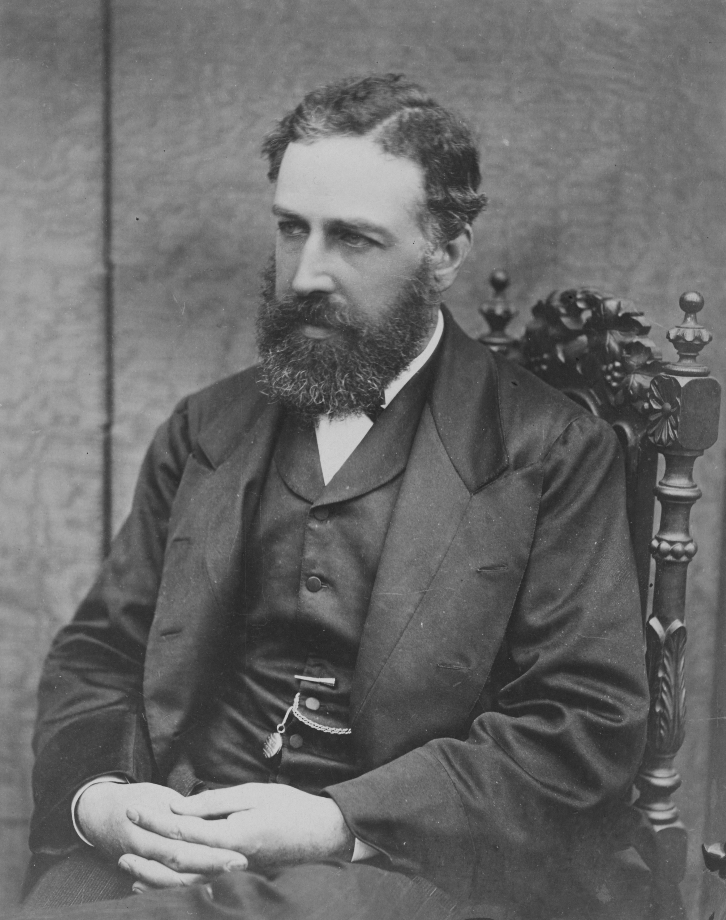
Jevons (1871), Menger (1871), and Walras (1874) arrive at marginal utility in three countries and three languages. Gossen had published it in 1854 in a book that almost no one read. It is the most cited multiple in the history of economic thought—and the most contested.
Mark Blaug (1972) asked whether a “marginalist revolution” ever really took place. William Jaffé (1976) proposed “de-homogenizing” the three, who differed in both problems and method. Niehans narrows the common element to the consumer’s equilibrium condition: it is found in Gossen, Jevons, and Walras, but not in Menger.
1915-1934: Slutsky, in Italian
In 1915 the Russian Evgenij Slutsky published in the Giornale degli Economisti “On the Theory of the Consumer’s Budget,” featuring the decomposition of a price effect into substitution and income components. The article—mathematical and written in Italian—remained unused. In 1934 Hicks and Allen reinvented the decomposition without knowing of it.
1930: the cobweb, three countries in the same year
Henry Schultz in the United States, Jan Tinbergen in the Netherlands, and the Italian Umberto Ricci formalized in 1930—apparently independently—the dynamics of a market in which supply responds to price with a lag. All three started from the statistical work of Henry L. Moore: same problem, same tools. The name “cobweb theorem” arrived with Kaldor in 1934, and the canonical formulation with Ezekiel in 1938.
1940-1952: de Finetti anticipates Markowitz
In 1940 Bruno de Finetti, studying reinsurance, set up mean-variance analysis with correlated risks in the essay “Il problema dei pieni.” Markowitz and A. D. Roy brought it into finance in 1952. In 2006 Markowitz himself titled an article “de Finetti scoops Markowitz,” clarifying that de Finetti had solved the case of uncorrelated risks, not the general one.
1954: general equilibrium and the third man
The proof of existence of competitive equilibrium is known as “Arrow-Debreu,” after the article published in Econometrica in July 1954. Lionel McKenzie had published a proof in the previous issue of the same journal. Arrow (1972) and Debreu (1983) received the Nobel, McKenzie did not. Düppe and Weintraub (2014) reconstructed the episode from archival records as a problem of scientific credit.
1956: Solow and Swan
Solow publishes in February in the Quarterly Journal of Economics, Swan in December in the Economic Record. The issue with Solow reaches Canberra in April, but Swan presents his model at a June or July seminar without having seen it, in front of James Meade. In textbooks it remains the “Solow model.”
Dimand and Spencer point to causes that were partly accidental: timing, the Australian journal, the choice to present the model using only the Cobb-Douglas, Swan’s reluctance to publish.
1961-1966: the CAPM in four versions
Jack Treynor (1961-62 manuscripts), William Sharpe (1964), John Lintner (1965), and Jan Mossin (1966) build the same model starting from Markowitz. Treynor’s work circulates as a mimeograph but does not appear in a journal: it will be printed only in 1999. The 1990 Nobel rewards Sharpe.
1973: options, at Merton’s

Black and Scholes publish the formula in the May-June 1973 issue of the Journal of Political Economy; Robert C. Merton publishes derivation and extensions in the Bell Journal in the spring of the same year. It is not a pure multiple: according to the Harvard archive, the three created the theory partly independently and partly in collaboration, with Scholes and Merton at MIT and Black a frequent visitor.
The son of the theorist of priority calls the model “Black-Scholes” in his own article. The 1997 Nobel goes to him and to Scholes: Black had died in 1995.
When the Times Aren’t Ripe: Premature Discoveries and True Singles
The theory has a flip side: a correct idea that arrives too early is not taken up, and some ideas are not duplicated at all.
| Author and year | Idea | What happened |
|---|---|---|
| Cantillon, 1755 | Linear model of prices traced back to land | Never duplicated: according to Niehans it would have spared errors for Quesnay, Ricardo, and Marx |
| Cournot, 1838 | Mathematical theory of the firm and oligopoly | For decades there was only one reader able to use it, Marshall; taken up again in the 1930s |
| Gossen, 1854 | Marginal utility and consumer equilibrium | Book ignored, rediscovered after Jevons and Walras |
| Bachelier, 1900 | Brownian motion of prices and an options formula | Forgotten until Samuelson and his students rediscovered it |
| Slutsky, 1915 | Substitution and income effects | Reinvented by Hicks and Allen in 1934 |
| von Neumann, 1928 | Game theory | A single: no one else was working in the same direction; relaunched with Morgenstern in 1944 |
| de Finetti, 1940 | Mean-variance analysis | Acknowledged by Markowitz in 2006 |
| Leontief, 1941 | Input-output analysis | A single: without Leontief, according to Niehans, this step would have been skipped |
| Muth, 1961 | Rational expectations | Unused for ten years, then the foundation of Lucas’s macroeconomics |
Merton is familiar with the objection. He admits that discoveries long delayed are a problem for the theory and replies that what matters is “social and cultural time,” not calendar time: two discoveries far apart in years may arise under the same intellectual conditions.
For Stigler, the key is the demand for ideas. A result becomes established when the discipline needs it; before then it remains a precedent that no one uses. For Niehans, true singles exist but are few: in most classic contributions there is a sign that someone else would have gotten there.
Priority, Eponymy, and the Matthew Effect
The multiple creates a credit problem: among several discoverers, the discipline’s memory usually preserves just one—and not always the first.
Priority. For Merton (1957), quarrels over precedence arise from the norms of science. Originality is the highest value and recognition by one’s peers is the reward; at the same time, however, modesty is required. The scientist is caught between the two. In economics, a typical case is Walras, who in 1896 asserted priority against Wicksteed for the theory of marginal productivity: today it is believed that he had learned it from Enrico Barone.
Eponymy. Giving a discovery someone’s name is the highest and the most inaccurate prize. Stephen Stigler turned it into a law: no discovery bears the name of its first discoverer. Economic examples are plentiful:
- the “Paretian” optimum is already in Edgeworth (1881);
- the “Cobb-Douglas” function had been used decades earlier by Wicksell;
- the “Herfindahl” index is due to Hirschman (1945), who in 1964 noted that his index bore the name of Gini, who had not invented it, or of Herfindahl, who had reinvented it;
- the “Solow model” is also due to Swan, and “Arrow-Debreu” is also due to McKenzie.
The Matthew effect. Merton (1968) observed that, other things equal, credit goes to the better-known name: “to everyone who has, more will be given.” This applies in particular to multiples among scholars of different standing. Samuelson said it of Ricardo and Torrens: in the history of theory, the bigger name crowds out the smaller one. In March 2009, Solow’s 1956 article had 1,718 citations, Swan’s 401.
There is a family exception. Robert C. Merton, co-discoverer of the options formula, named it after the other two.
The Nobel in the face of multiples
The Nobel Prize makes the credit problem visible: it can go to at most three people and is not awarded posthumously, whereas multiples often have more discoverers, some already deceased.
| Discovery | Laureates | Co-discoverers without a prize |
|---|---|---|
| Linear programming | Kantorovich and Koopmans, 1975 | Dantzig |
| General equilibrium | Arrow 1972, Debreu 1983 | McKenzie |
| Neoclassical growth | Solow, 1987 | Swan, died in 1989 |
| Mean-variance portfolio | Markowitz, 1990 | de Finetti, died in 1985; Roy |
| CAPM | Sharpe, 1990 | Lintner, died in 1983; Mossin, died in 1987; Treynor |
| Option pricing | Merton and Scholes, 1997 | Black, died in 1995 |
| Consumption and long-run income | Friedman 1976, Modigliani 1985 | None: both awarded, in different years |
The prize has adapted. In the 1980s, all ten prizes went to a single scholar; between 2020 and 2025, that happened once in six.
The discipline has become more crowded and more collective, and those making the award are ever more often confronted with discoveries with many fathers. The cap of three remains: with four versions of the CAPM or six of the golden rule, someone is excluded by construction.
Criticisms and limits
Merton’s thesis holds up as a lens for reading the history of science, not as a law: the most serious objections concern what counts as “the same discovery” and how frequent multiples really are.
| Objection | Who raises it | What remains of the thesis |
|---|---|---|
| It is almost unfalsifiable: if every single is a failed multiple, no case refutes it | Merton himself calls it almost unverifiable; Georgescu-Roegen deems it tautological | It holds as a research program: it asks us to explain singles, not to deny them |
| The co-discoverers did not discover the same thing | Patinkin on the central message, Jaffé on the three marginalists, Brooke on the history of science | The “multiple” is often a family resemblance: it must be shown case by case |
| Independence is doubtful | Historians of the 1815 and 1973 cases: the authors read one another or worked together | Informal exchanges are part of “ripe times,” but they weaken the proof |
| Lists show that multiples are possible, not how frequent they are | Clancy | Where they are measured they are 2–3% of projects, many more among major discoveries |
| The distribution is not that of chance | Brannigan and Wanner; Li, Lin and Wu | The long tail reinforces the idea of ripe problems that attract many people |
| There are premature discoveries and true singles | Georgescu-Roegen, Niehans | Maturity also concerns who receives the idea, not only who produces it |
| It assumes cumulative and inevitable progress | Mirowski, De Marchi | For Niehans, in economics what is cumulative is the logic of the tools, not empirical knowledge |
| Multiples do not serve to prove that science is social | George Stigler | They remain the best natural experiment available to the historian |
What we can take from it
Merton’s lesson for economics is that the useful question is not “who got there first?” but “why right then, and why so many?”.
- For historians of ideas. A multiple is a natural experiment, like twins for the geneticist: the same result under different conditions shows what matters and what does not. In economics, says Niehans, what matters is the state of analytical tools more than ideology or the business cycle.
- For researchers. If a problem is ripe, others are working on it. Circulating results early is not vanity: it is how priority gets recorded and duplication avoided. Swan, who published little and late, is the counterexample.
- For evaluators. Eponyms and prizes compress credit onto a single name. The history of multiples invites us to read “Solow,” “Arrow-Debreu,” or “Black-Scholes” as labels, not as attributions.
- For research funders. Redundancy protects important discoveries, not the others. On sparsely populated problems, a lost idea can remain lost for decades: there, diversity of programs is worth more than competition on the same topic.
The question of the present remains open. Niehans saw two opposing forces. English as a common language, uniform mathematical training, and databases reduce rediscoveries; the growth of publications and of a worldwide research community multiplies them. Recent measurements say multiples have not disappeared: they have become races among teams working at the same time.
Essential chronology
| Year | Event |
|---|---|
| 2025 | Li, Lin and Wu: across 40 million papers, breakthroughs arrive in multiple copies more often. Hill and Stein measure the cost of coming in second |
| 2014 | Düppe and Weintraub, Finding Equilibrium |
| 2006 | Markowitz, «de Finetti scoops Markowitz» |
| 2003 | Robert K. Merton dies |
| 1997 | Nobel Prize to Robert C. Merton and Myron Scholes |
| 1995 | Niehans, «Multiple discoveries in economic theory», with comments by De Marchi and Mirowski |
| 1994 | National Medal of Science to Merton |
| 1982 | Patinkin, Anticipations of the General Theory? |
| 1980 | Festschrift for Merton: essays by George Stigler, Samuelson, and Stephen Stigler |
| 1973 | The Sociology of Science is published. Options-pricing formula by Black, Scholes and Merton the younger |
| 1968 | Merton, «The Matthew Effect in Science» |
| 1963 | Merton, «Resistance to the Systematic Study of Multiple Discoveries in Science» |
| 1961 | Merton, «Singletons and Multiples in Scientific Discovery» |
| 1957 | Merton, «Priorities in Scientific Discovery» |
| 1922 | Ogburn and Thomas, «Are Inventions Inevitable?»: 148 cases |
| 1828 | Macaulay uses rent theory as an example of simultaneous discovery |
| 1815 | Four pamphlets on rent in three weeks |
Sources
Pages consulted on 13 October 2026. Merton (1961), Niehans (1992), Madarász (2024), Dimand and Spencer (2009), Clancy (2022), and Li, Lin and Wu (2025) were read in full; for the other pages, abstracts or excerpts were used.
Merton
- Merton, «Singletons and Multiples in Scientific Discovery», 1961: hypotheses, data on the 264 multiples, priority disputes, Kelvin
- Merton, «Resistance to the Systematic Study of Multiple Discoveries in Science», 1963
- Robert K. Merton, Wikipedia entry and obituary in Columbia College Today
- Robert C. Merton, Nobel Prize profile and biography
- Brooke, «Photo-Finish», London Review of Books, 1985: critique of the notion of the «same discovery»
Multiples in economics
- Niehans, Multiple Entdeckungen in der Wirtschaftstheorie, 1992: main source for the atlas
- Madarász, «Posztót borért», Közgazdasági Szemle, 2024: Stigler, Samuelson and Niehans on Merton; the Torrens–Ricardo dispute
- Patinkin, Anticipations of the General Theory?, 1982 and Backhaus, «Keynes's German Contenders», 1997
- De Marchi, comment on Niehans, 1995
- Ullmer, thesis on Petty and Barbon, 1996: objections by Georgescu-Roegen
- Profile of Torrens and profile of Barone, History of Economic Thought Website
- Takenaga, «James Anderson and the origin of the theory of ground rent», 2023
- Jaffé, «Menger, Jevons and Walras De-Homogenized», 1976
- Poitras, «Cobweb Theory, Market Stability, and Price Expectations» and Lendjel, «The statistical origin of the cobweb diagram»
- Schilirò, «The symposium on Mr. Keynes' System and the IS–LM model»
- Markowitz, «de Finetti Scoops Markowitz», 2006
- Weintraub, «Lionel W. McKenzie and the Proof of the Existence of a Competitive Equilibrium», 2011 and Düppe and Weintraub, Finding Equilibrium, 2014
- Dimand and Spencer, «Trevor Swan and the Neoclassical Growth Model», 2009
- French, «The Treynor Capital Asset Pricing Model», 2003 and memorial for Treynor, American Finance Association
- Baker Library, Harvard Business School: the options-pricing formula and Merton, «Theory of Rational Option Pricing», 1973
- Stigler’s law of eponymy and the history of the Herfindahl–Hirschman Index
Measures and tests
- Li, Lin, and Wu, “Is Science Inevitable?”, 2025
- Clancy, “How common is independent discovery?”, 2022: review of Hagstrom, Hill and Stein, Painter, Bikard, Ganguli, and others
- Hill and Stein, “Scooped! Estimating Rewards for Priority in Science”, Journal of Political Economy, 2025
- Ogburn and Thomas, “Are Inventions Inevitable?”, 1922, entry
- List of Nobel Prizes in Economics
Works cited second-hand
Not consulted directly: Merton (1957, 1968); Price (1963); Hagstrom (1974); Simonton (1978, 1979); Stigler, Samuelson, and Stephen Stigler (1980); Brannigan and Wanner (1983); Dasgupta and David (1994); Niehans, De Marchi, and Mirowski (1995); Blaug (1972); Viner (1937); Robbins (1958); Ruffin (2005); de Vivo (2010).